
Confidential HIV Test in Dubai
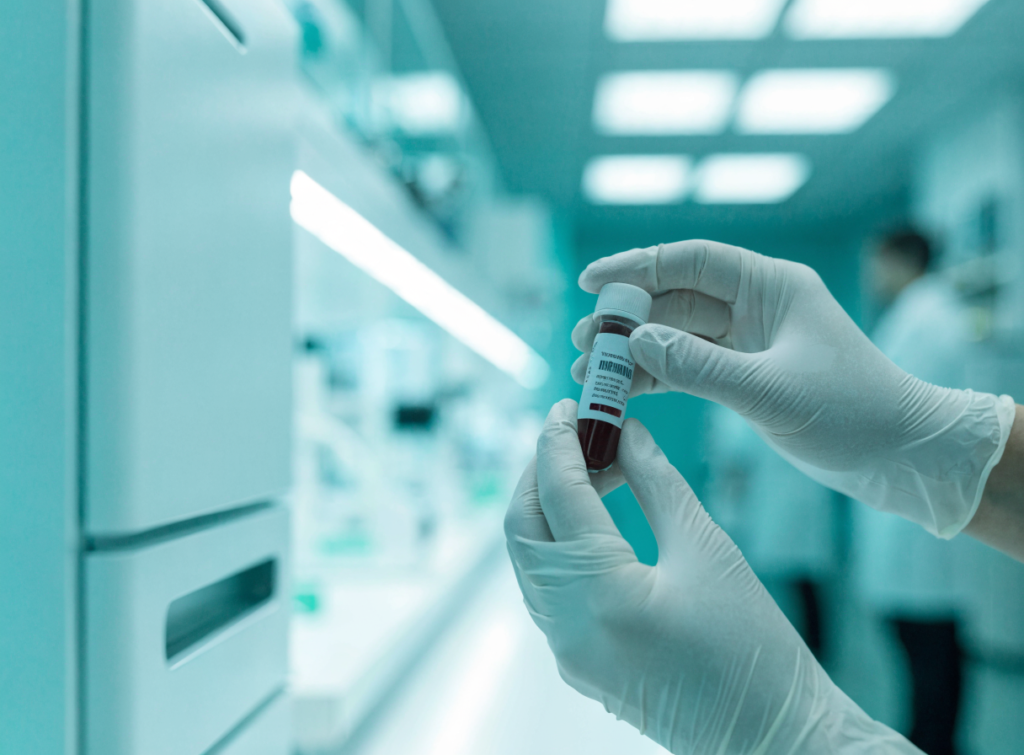
A laboratory HIV test at our clinic in Dubai Healthcare City, with a doctor who explains your result. The fourth-generation antigen/antibody test detects most HIV infections 18 to 45 days after an exposure.
Possible exposure in the last 72 hours? Read HIV exposure in Dubai: the first 72 hours first, because HIV post-exposure prophylaxis (PEP) works only in that window.
- Laboratory fourth-generation HIV test
- Results reviewed by a doctor
- Open every day, 07:00 to 23:00
In short
- A laboratory fourth-generation HIV test (antigen/antibody) detects most HIV infections 18 to 45 days after an exposure, with a sensitivity and specificity above 99 percent.
- An HIV RNA test detects the virus itself and turns positive earlier, 10 to 33 days after infection.
- Rapid finger-prick tests take 18 to 90 days to turn positive, and an oral home test missed about 7 in 100 HIV infections in its approval study.
- Every adult takes at least one HIV test; people with new or several partners test once a year or more often.
- HIV testing in Dubai is confidential but not anonymous: UAE law requires a confirmed HIV infection to be reported to the health authority.
Which HIV test gives a reliable result?
The laboratory fourth-generation antigen/antibody test is the standard HIV test recommended by the US Centers for Disease Control and Prevention (CDC). The test detects antibodies against HIV-1 and HIV-2 and the p24 antigen, a protein of the virus that appears before antibodies. In studies, combination antigen/antibody tests reach a sensitivity and specificity above 99 percent.
The table lists how many days after infection each HIV test usually turns positive, from HIV.gov.
| Test | What it detects | Turns positive after |
|---|---|---|
| HIV RNA test (nucleic acid test) | The virus itself | 10 to 33 days |
| Laboratory antigen/antibody test (fourth generation) | p24 antigen and antibodies | 18 to 45 days |
| Rapid antigen/antibody test (finger prick) | p24 antigen and antibodies | 18 to 90 days |
| Antibody test, including most rapid and home tests | Antibodies | 23 to 90 days |
A positive screening test is a preliminary result. A second laboratory test, the HIV-1/HIV-2 antibody differentiation test, confirms an HIV diagnosis.
Rapid antibody tests missed about 12 percent of early HIV infections, about 1 in 8, in one study. In the study submitted to the US Food and Drug Administration (FDA), the oral home test detected 92.9 percent of HIV infections, so about 7 in 100 stayed undetected (Scientific American). A laboratory test from a vein is therefore the better choice after a possible exposure.
How an HIV test works at STD Clinic Dubai
An HIV test at STD Clinic Dubai follows 4 steps.
- Short consultation. The doctor asks when the last possible exposure happened and whether you have symptoms, because the timing decides whether today’s result is final.
- Blood sample. A blood sample from a vein for the laboratory fourth-generation antigen/antibody test.
- Result. Laboratory results are typically ready in 24 to 48 hours. A doctor reviews every result and contacts you privately.
- Other STDs. An HIV test is often combined with tests for syphilis, hepatitis B and C, chlamydia and gonorrhoea, because these infections share the same routes.
Exposure less than 72 hours ago? See HIV exposure in Dubai: the first 72 hours.
When to take an HIV test after a possible exposure
A laboratory antigen/antibody test detects most HIV infections 18 to 45 days after the exposure. A test in the first 2 weeks only shows the HIV status before the exposure. An HIV RNA test turns positive 10 to 33 days after infection; in the first 7 to 21 days, on average 8 to 10 days, even an RNA test stays negative. Doctors call this phase the eclipse phase.
Which testing schedule follows an exposure?
After a possible exposure, HIV tests take place at 4 to 6 weeks and at 3 months, each with an antigen/antibody test and an HIV RNA test, as in the 2025 CDC guidelines. People who started PEP within 24 hours and missed no dose skip the 4 to 6 week test. A negative result is final only when the last test falls after the window period and no new exposure happened in between, according to HIV.gov.
Which symptoms need an HIV test at once?
Acute HIV infection often causes symptoms 2 to 4 weeks after the exposure. In five studies of 378 people with acute HIV, the most common symptoms were fever in 75 percent (3 in 4), tiredness in 68 percent, muscle pain in 49 percent, skin rash in 48 percent and headache in 45 percent. These symptoms after an exposure are a reason for an HIV test straight away, including an HIV RNA test.
How often do adults test for HIV?
Every adult takes at least one HIV test in their lifetime. An annual or more frequent HIV test suits people with condomless sex with new or several partners, a partner with HIV, sex work or shared needles. People taking pre-exposure prophylaxis (PrEP), HIV medicines taken before sex, test every 2 to 3 months. A diagnosis of another sexually transmitted infection is also a reason for an HIV test.
Why an early HIV diagnosis matters
People diagnosed early and treated with antiretroviral therapy (ART) reach a life expectancy close to that of the general population. People with HIV who take treatment and keep their viral load below 1,000 copies per millilitre rarely pass HIV on. In the United States, about 13 percent of people with HIV, roughly 1 in 8, do not know they have it, which delays treatment and raises the risk for partners.
HIV testing in Dubai and the UAE
Is HIV testing in Dubai confidential?
HIV testing at STD Clinic Dubai is confidential: your results are filed under a patient ID number and shared only with you. HIV testing in the UAE is not anonymous. Federal Law No. 14 of 2014 on communicable diseases requires doctors and laboratories to notify the health authority of a confirmed HIV infection.
What happens after a positive HIV test?
A positive screening test is confirmed with a second laboratory test before anyone receives an HIV diagnosis. After a confirmed diagnosis, care continues in a specialised HIV service; in Dubai, Rashid Hospital runs an HIV programme.
Frequently asked questions about HIV tests in Dubai
Short answers about timing, results and confidentiality.
A laboratory antigen/antibody test detects most HIV infections 18 to 45 days after an exposure. An HIV RNA test detects infection after 10 to 33 days, and rapid finger-prick tests after 18 to 90 days.
No. A negative laboratory antigen/antibody test at 4 weeks is reassuring but not final, because the window period of the test runs up to 45 days. Guidelines repeat the HIV test at 3 months after the exposure.
Laboratory results at STD Clinic Dubai are typically ready in 24 to 48 hours. A doctor reviews the result and contacts you privately.
No. HIV testing in Dubai is confidential but not anonymous. UAE law (Federal Law No. 14 of 2014) requires doctors and laboratories to notify the health authority of a confirmed HIV infection.
Home HIV tests are less sensitive than laboratory tests. The oral home test detected 92.9 percent of HIV infections in its approval study, and a positive home test always needs a laboratory confirmation.
No. A positive rapid HIV test is a preliminary result. A laboratory antigen/antibody test and a confirmation test decide the diagnosis.
Every adult takes at least one HIV test. People with new or several partners test once a year or more often, and people on PrEP every 2 to 3 months.
Book your appointment
Send your name and contact details, and the clinic gets back to you to arrange your visit in Dubai Healthcare City.
Request an appointment
Your details are used only to answer your enquiry.
Related guides
Sources
- HIV Testing Overview, HIV.gov, US Department of Health and Human Services
- Clinical Guidance for PEP (2025), US Centers for Disease Control and Prevention
- Over-the-counter OraQuick HIV test: what does this mean for you?, Scientific American
- Federal Law No. 14 of 2014 Concerning the Prevention of Communicable Diseases, UAE Ministry of Health and Prevention
- Service Catalogue Rashid Hospital, Dubai Health Authority
- Daar ES, Pilcher CD, Hecht FM. Clinical presentation and diagnosis of primary HIV-1 infection. Curr Opin HIV AIDS 2008.